

Vacation rental businesses have been a viable source of income for homeowners for decades. From greater flexibility to higher profits and turnover, there are plenty of advantages to managing short-term rentals. As they’ve grown up into a respected industry of their own, however, owners are beginning to face an increasing number of restrictions when it comes to the properties they manage.
Often prompted by objections from neighbors and big players in the hotel industry, many cities have been left with no other option than to roll out strict regulations for short-term renting. In many cases, owners and managers may be slapped with huge fines if they are not compliant. For example, in the city of Miami, homeowners were faced with a penalty fee of up to $20,000 – and that was just for the first violation. However, recently this fine was struck down in court as illegal.
As players in an industry that’s constantly evolving, growing and adapting to new trends and technologies, property owners must also understand and abide by the legal requirements in their state. While the rules and regulations will ultimately vary from one place to another, here are the four most frequently asked questions that concern property owners and managers in the short-term rental sphere.
Don’t see the form to download the Rental Agreement Template? Click here.
1. What is a short-term rental?

While it is commonplace to think that the definition of a short-term rental is simply renting out a property for a short period such as a weekend or a couple of weeks, but the real definition is more complex and can differ based on two central components:
Type of structure
Even though in one city or state, a short-term rental might be defined in the “Airbnb way” as a shared room, private room or an entire property, in another state, there may be a minimum number of bedrooms the property has to have before it will be considered as a short-term rental.
Check what the definition is for your local area on your city or county website, as this will impact both how you rent your home and the types of permits and licenses you require.
Length of stay
Similarly, depending on regional restrictions, how long guests can stay at your property plays a key role in clarifying whether it is a short-term rental (or not). Some cities limit the length of stay for up to 30 days, others prohibit the rental of properties for any less than that. Therefore before making any big commitments, always read up on the rules where you are looking to set up your rental business.
2. Short term rental laws: What legal restrictions exist?

Besides defining a short-term rental in terms of its structure and length of stay, there are other legal restrictions that vacation rental owners will need to consider. These again will likely change subject to location, but common legal restrictions include:
Prohibition of short-term rentals
In some cities, short-term rentals are not legal in any shape or form. In other cities, there may be restrictions on certain zones or areas where you can and cannot run a vacation rental. In Los Angeles, hosts listing on Airbnb can only rent out their property if it is their primary residence. Furthermore, homeowners are limited to renting for only 120 days a year, unless they pay extra fees and obtain special approval from the city.
Limit on the number of vacation rentals in a location
Bigger cities and key tourist destinations often have stricter rules when it comes to how many vacation rentals can operate in any given part of the city. In Hawaii, a new law was passed that limits the number of rentals allowed to operate to 1,715 properties in Honolulu.
Multiple dwelling laws
In cities such as New York, where the Airbnb effect has been said to push up rent costs for local residents, there are laws in place – such as the Multiple Dwelling Law – which only permits rentals of fewer than 30 days in buildings which house more than three families (living independently) and if the permanent resident is present. Failure to abide by this law can result in a penalty of up to $2,500 per day!
It’s therefore essential to read up on all legal requirements and restrictions for your city or state if you are hoping to turn your property into a vacation rental.
3. Short term rental license: What licenses and permits are required?
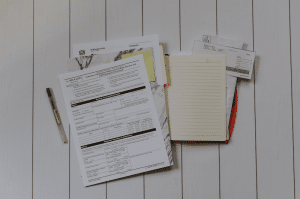
As a vacation rental owner or manager, you may need to secure the following licenses before you can operate:
General business license
Your city or county requires a general business license or permit for any business – including a short-term rental. Be sure to register your business with your local government.
Short-term rental license
Given the legal restrictions listed above, it’s more than likely you will need a license or permit for short-term renting. Typically, your application will ensure your vacation rental meets property health and safety requirements, it’s compliant with zoning restrictions and that neighboring properties have received a notification.
You may also have to provide proof that the property you are renting is not your primary residence. License and permit requirements should be available on your local government website.
4. Short term rental tax: How do taxes work?

Taxes are an inevitable part of running any business. In many cases, besides income and self-employment taxes, local governments will establish a short-term rental tax. Just like hotels, this may take the name of lodging or hotel tax.
Keep a record of all your finances
There are often a number of deductible expenses that vacation rental owners can take into consideration when filling out a tax return. For example, if you provide each guest with a welcome gift basket, buy new bedsheets or pillows, or purchase anything for your property, you may be able to deduct these purchases from your vacation rental income. Make sure not to throw away any of your receipts!
It’s therefore important to keep copies of all rented periods for the year, and bills for any regular expenses incurred such as insurance, repairs, cleaning, utilities, and marketing.
Collect tax from your guests
When advertising your vacation rental on OTAs, more often than not, some companies automatically charge the guest taxes such as occupancy or lodging tax.
When taking bookings from your vacation rental website, it’s the host’s responsibility to ensure that the guests are charged occupancy tax according to local laws. In order to find out how much you should be charging, check your local government website in your country and state. Failure to do so may result in a fine or legal action.
14-day rule in the US
In the United States, you won’t need to pay taxes on your income if you rent out your property for no more than 14 days per year and if you use the rental property personally for over 14 days or more, or at least 10% of the total days you would rent it out to guests.
Therefore, if you rent your property for more than 14 days per year, all standard tax laws apply, according to your location of course.
Other taxes
As well as the taxes listed above, there are other taxes you need to account for such as income tax, VAT, self-employed taxes and Goods and Services Tax. Depending on your region, you need to clarify with your local city hall.
Some hosts only rent out their vacation rental part-time and have it for their personal use. If this is the case, it’s best to keep the taxes separate from when your guests are there to when you are there. Account the number of days a year your rental was occupied by travelers, and from there you can do your tax calculations.
What to take away
Just as the vacation rental market itself is growing and changing all the time, so are the laws that keep it in order. An increasing number of cities are cracking down and taking measures to protect neighborhoods, residents and visitors alike.
In many cases, local lawmakers are working with property managers in a bid to avoid banning vacation rentals altogether. This aims to bring more structure to the table with clear rules for each property owner to adhere to.
The best thing to do is to frequently check your location’s laws and requirements to stay up-to-date with the latest news and regulations.
Make sure you comply with all the laws and regulations in your state to avoid any serious legal implications. Always check you have the correct license and permit for your short-term rentals and never forget to pay tax. If ever in doubt, speak to an attorney who will be able to further clarify.
Don’t see the form to download the Rental Agreement Template? Click here.